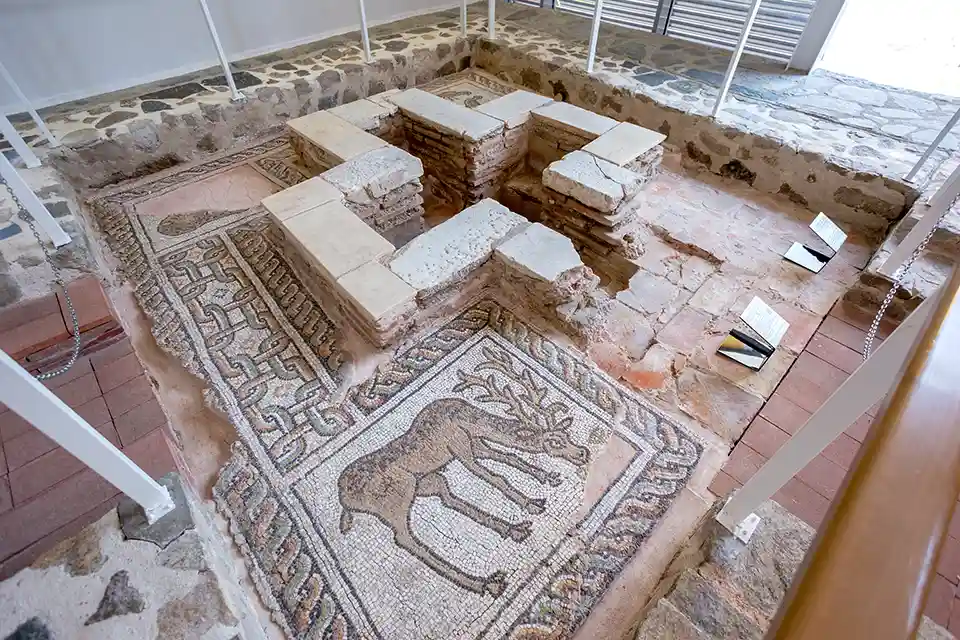
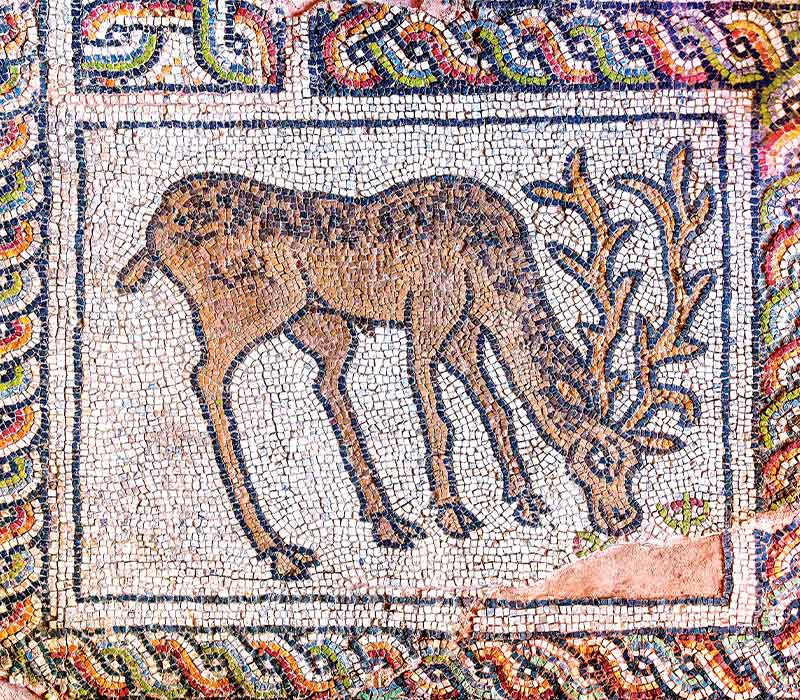
Detail from the baptistery’s floor mosaic IN THE SMALL BASILICA
Roman Philippopolis(Plovdiv, Bulgaria), 6th c.
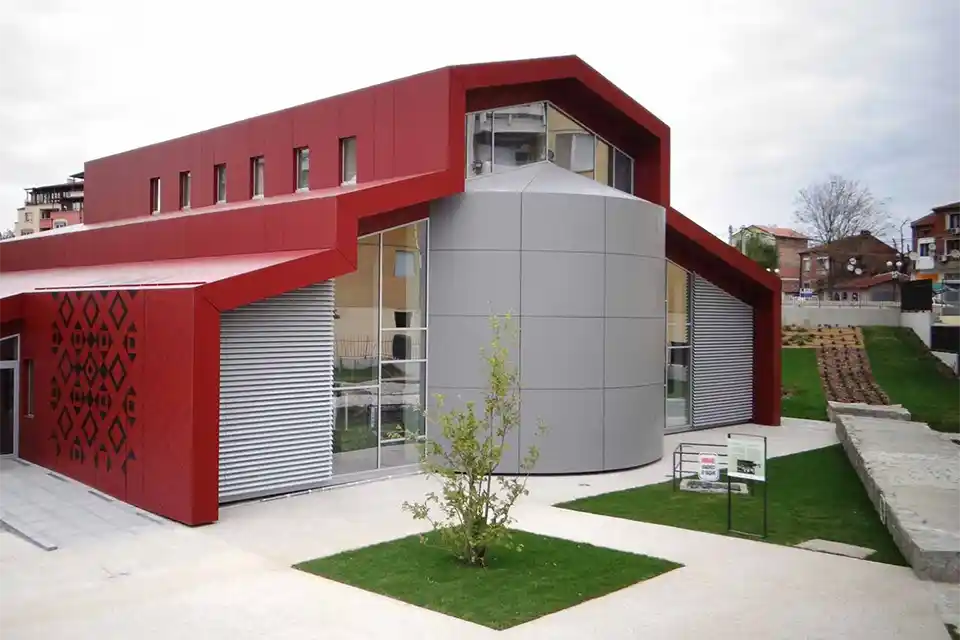
Small Basilica of Philippopolis, Plovdiv
Photography: Anton Chalakov. The photo is taken with the permission of the Ancient Plovdiv Municipal Institute.
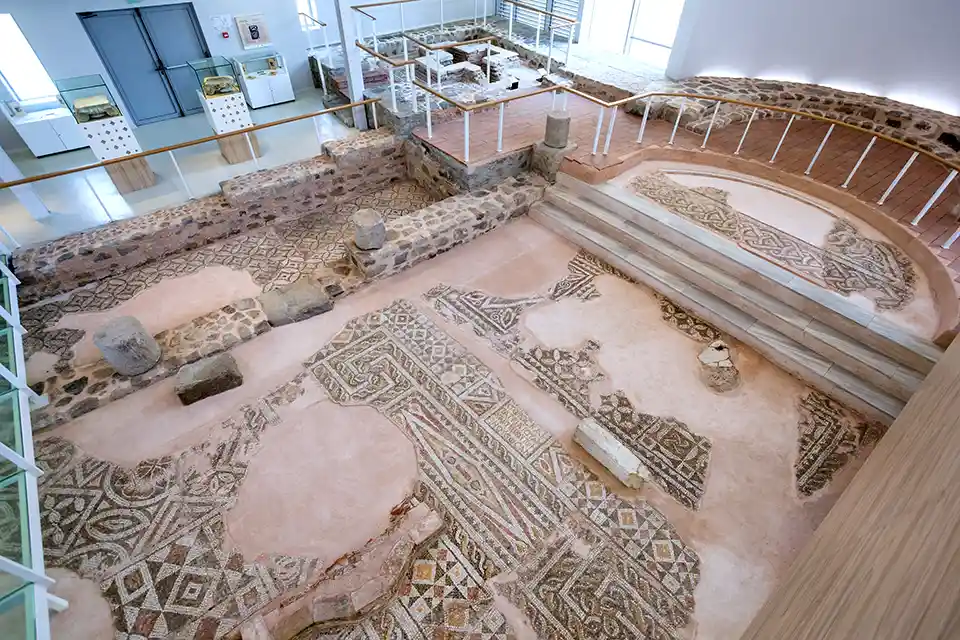
The Small Basilica of Philippopolis is the third building with ancient mosaics in Plovdiv, part of the serial property on the UNESCO indicative list for significant natural and cultural sites, alongside with the Episcopal Basilica and the Eirene Building. Like them, it was discovered during rescue excavations in the 1990s, and due to its smaller size compared to the Episcopal Basilica, it was named the “Small Basilica.” It is a three-nave church with polychromatic mosaic floors in all its rooms, including a donor inscription in Greek. Originating from the latter half of the 5th century, these mosaic treasures have endured the ravages of fire, yet subsequently restored.
In the early 6th century, the newly constructed basilica already had a brick floor, overlaying the original mosaic floor, with a baptistery attached to it. The baptistery featured a deep cross-shaped basin decorated with a polychromatic mosaic illustrating two deer and a pair of birds within a frame of linking motifs. The selection of these animals was influenced by the rising early Christian mythology of the time. Parts of the original mosaic, as well as the baptistery mosaic, remain preserved in situ, while others have been conserved and restored following the construction of a protective building for the basilica in 2013.
Ancient Plovdiv Municipal Institute

The Ancient Plovdiv Municipal Institute was established in 2004 to conserve and protect the movable and immovable cultural heritage of the city of Plovdiv. The Institute implements the cultural heritage policy of the Municipality of Plovdiv in accordance with Bulgaria’s national cultural policy and local traditions.