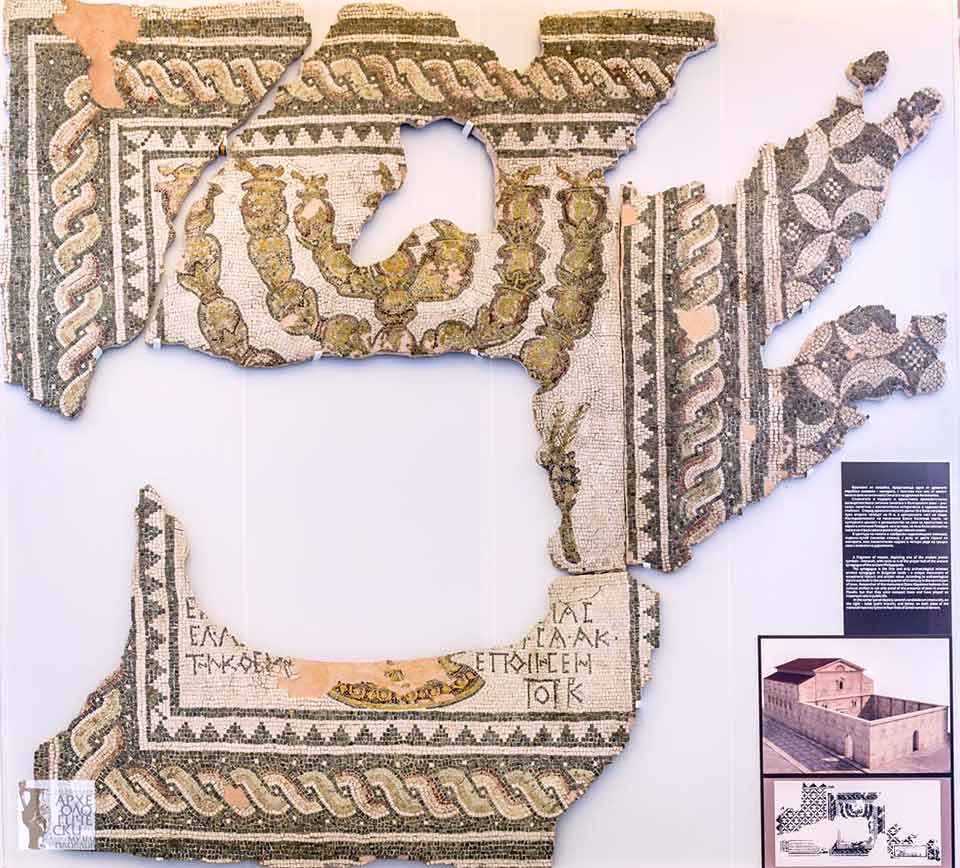
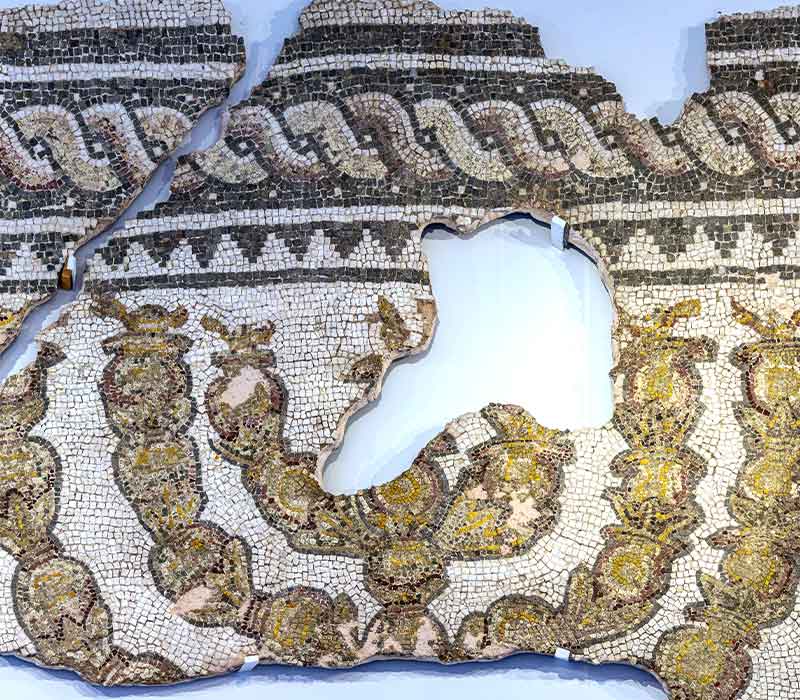
Menorah (detail). Floor mosaic from a Late Roman synagogue
Roman Philippopolis(modern-day Plovdiv), 3rd – 4th c.
Regional Archaeological Museum, Plovdiv.
Photography: Anton Chalakov. The photo was taken with the permission of the Regional Archaeological Museum, Plovdiv.
In addition to the impressive mosaics from the residential buildings of the Roman period, a single Roman mosaic depicting a seven-branched Jewish menorah, a festive palm branch (lulab), and a list of donors has also been preserved at the Regional Archaeological Museum in Plovdiv, revealing the religious diversity in ancient Philippopolis. Like the Narcissus/Hebros mosaic, it was unearthed during rescue excavations in the 1980s. It decorated the floor of an ancient synagogue in the second half of the 3rd and the beginning of the 4th century CE, attesting to a period of religious tolerance in the Roman Empire. It is also one of the earliest pieces of evidence for Judaism’s presence on the territory of present-day Bulgaria and the earliest preserved mosaic with a patently religious theme.
LEARN MORE ABOUT JEWISH CULTURE IN BULGARIA
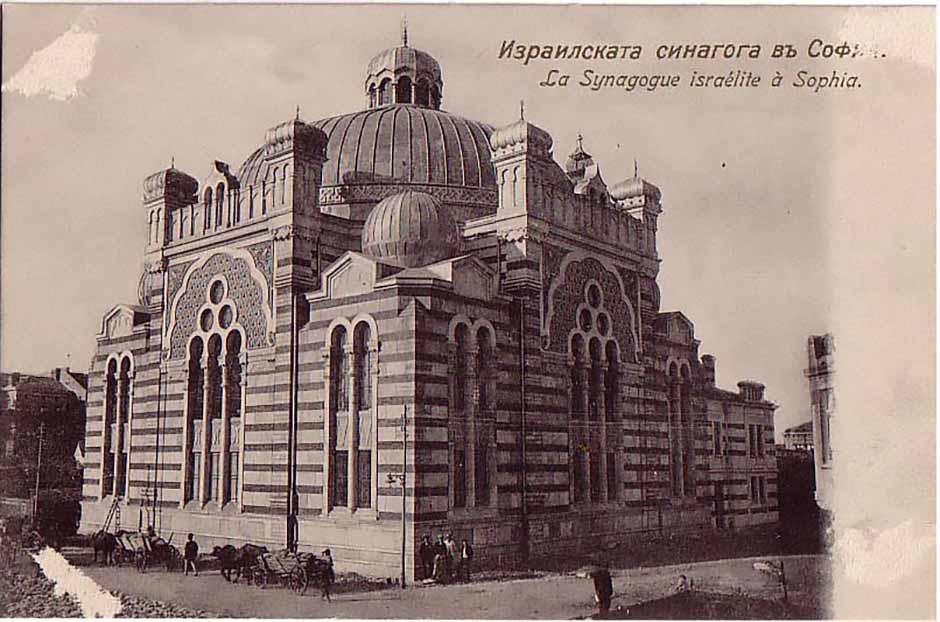
We do not know when the first Jewish communities settled in the lands of present-day Bulgaria, but there is evidence of a Jewish presence as early as the 2nd century CE. The adoption of Christianity as the sole religion of the Eastern Roman Empire in the 4th – 5th centuries marginalized Judaism. Historical sources on the fate of the Jews in these lands are scarce in the following centuries, but evidence suggests that their representatives were involved in one way or another in the social and religious life of both medieval Bulgaria and Byzantium from the 7th to the 14th centuries. After the Ottoman conquest of both countries by the mid-15th century, a new wave of Jewish communities (mainly Sephardic Jews) found refuge in the Ottoman Empire from persecution in the rest of Europe. Jews continued to develop their distinctive culture unhindered in modern Bulgaria after its liberation from the Ottomans in 1878 until the 1940s. Although an ally of Nazi Germany, Bulgaria refused to extradite its Jewish subjects to the death camps during the Second World War. Bulgaria and Denmark were the only European countries involved in the war whose Jewish population was saved from the Holocaust. After 1948, many Bulgarian Jews immigrated to the newly-established State of Israel while a small number remained and became one of the active and well-integrated ethnic groups in contemporary Bulgarian society.
Regional Archaeological Museum, Plovdiv

Located in a city with thousands of years of history that is heir to one of the largest and most important ancient cities on the Balkan Peninsula – Philippopolis, the Regional Archaeological Museum in Plovdiv was established in 1882, one of the oldest cultural institutions in Bulgaria. With nearly 100,000 exhibits – artefacts related to the history of Plovdiv and the region – the Museum owns one of the richest archaeological collections in the country.